
The Ghost of the Present: Photography as the Physicality of Memory

A few days ago, my wife came to me with an idea for a blog post. She started talking about the world and how it’s ever-changing. She mentioned that nature is in a constant state of flux, and each time you experience the world it’s never the same as when you last saw it. And that got me thinking. The trail today is not the trail I walked three years ago. The hemlocks are thinner, the creek bed has shifted six inches to the west, and the version of me that stood here then - the one with different anxieties and a younger heart - is effectively a stranger.
We often speak of nature as a static backdrop, a permanent stage for our weekend adventures. But nature is actually a slow-motion explosion of change. It is a series of nevers. You will never see this exact leaf in this exact state of decay again. You will never see this specific alignment of mist and morning light again. Every time we step into the wild, we are witnessing a version of the world that is already disappearing.
The Dormant Memory and the Sensory Fade
We have all had those moments where the world feels hyper-real. You’re standing on a ridge, the air is bitingly cold, and the smell of damp pine is so thick you can almost taste it. In that moment, you swear you’ll never forget it. You tell yourself the feeling is etched into your soul.
But time is a cruel editor.
Psychologists often speak of "sensory fade." The visceral electricity of that moment - the specific way the light hit the jagged rocks, the soft whisper of wind through the woods - dissolves into a general haze. It isn’t that the memory is gone; it’s just dormant. It sits in the back of the mind, a distant vision of what once was, gathering dust because we don’t have the energy to dwell on every sunset we’ve ever seen.
The memory requires a catalyst. It needs to be awakened.
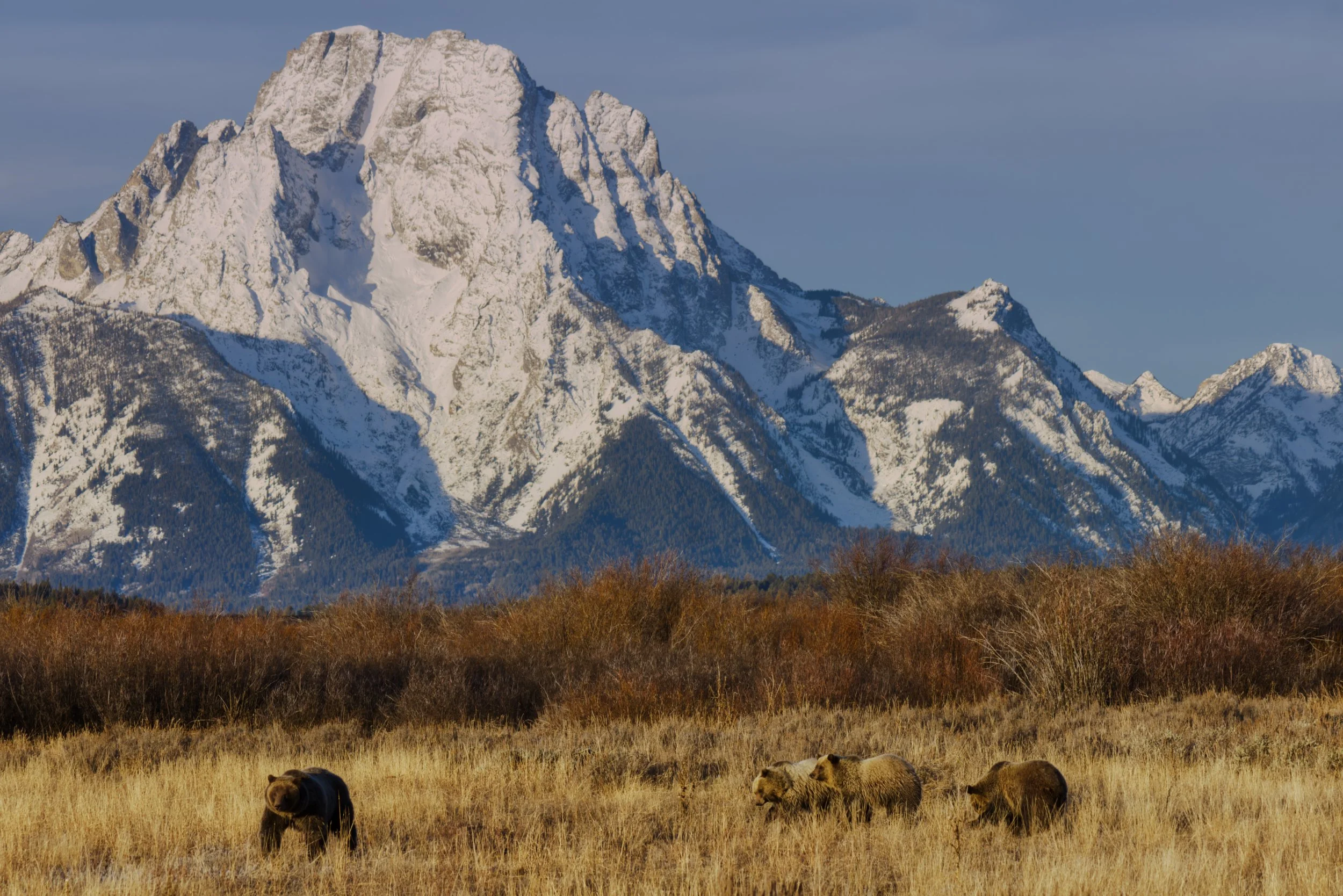
This is the true power of the photograph. It serves as a constant, physical, visual reminder of an experience. While our minds let the sensory details slip away to make room for the mundane tasks of daily life, the photograph stands guard. It is a lighthouse for the subconscious, a way to jog the brain back into that freezing morning or that quiet forest. It is the key that turns the lock on a memory you didn't even realize you were losing.
The Written Echo: Beyond the Frame
However, a photograph alone is only half the bridge. When we pair a photograph with a story - the written accompaniment of what occurred outside the frame - we create a complete sensory anchor.
A photo tells you what the light did; a story tells you what the light felt like. When I write about the mud clinging to my boots, the bite of the wind, or the sudden, startling silence of a snowfall, I am not just documenting facts. I am creating a sensory map.
For the photographer, this written narrative is a reminder of the "felt" experience. It ensures that the memory remains multidimensional. Years from now, I can look at an image and read those words, and the "ghost" of that moment becomes flesh again. The story allows me to re-inhabit my own past, hearing the birdsong and feeling the humidity that the pixels alone couldn't quite capture.
A Landscape in Flux: The Teton Lesson
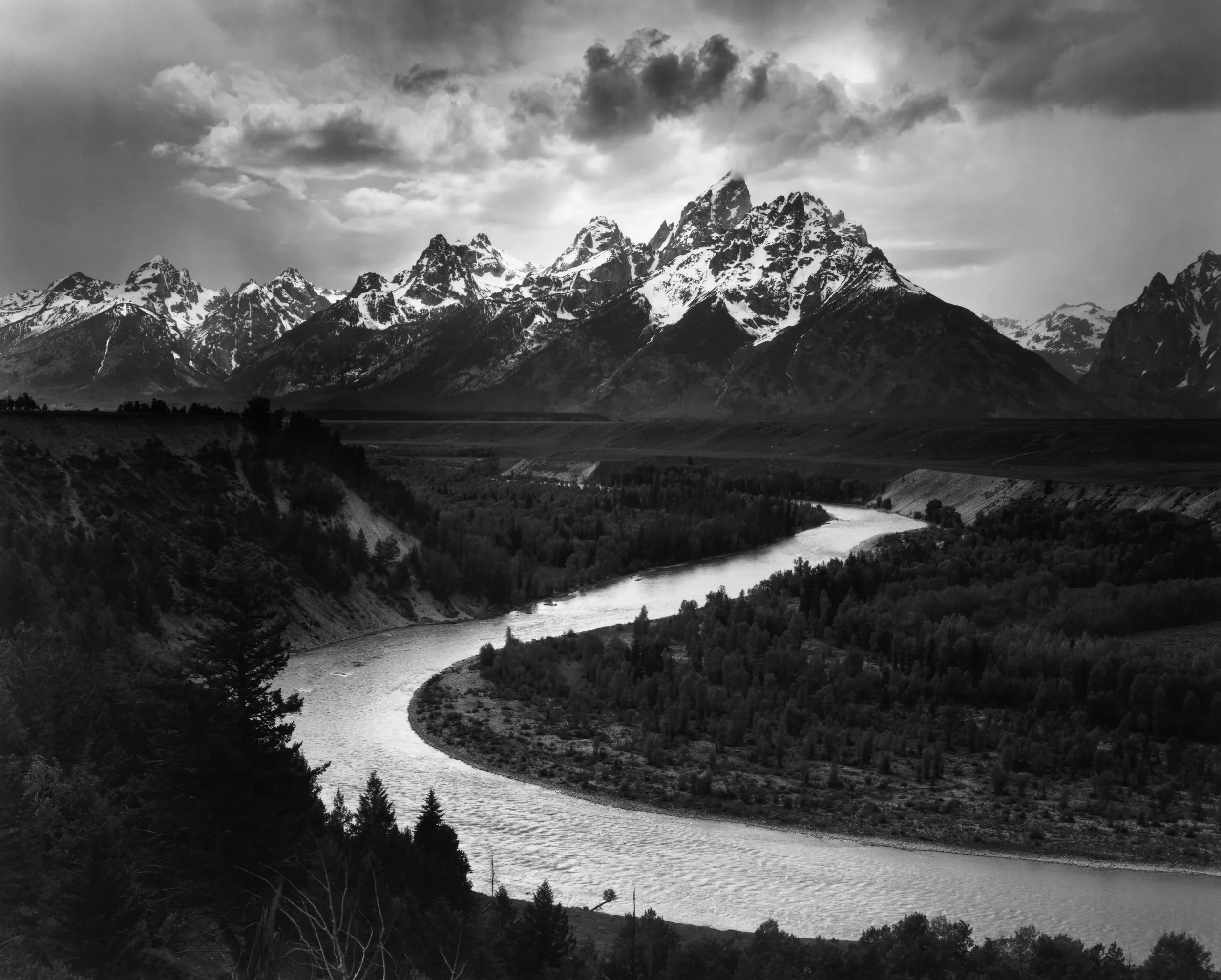
We see this change most clearly when we look at the giants who came before us. Consider Ansel Adams’ iconic 1942 view of the Tetons rising behind the Snake River. It’s a foundational image in American landscape photography.
I have stood in that same spot. But the "same" spot no longer exists.
Time has occurred. The trees have grown taller, their branches now reaching up to obscure the silver curve of the Snake River that Adams captured so clearly. A small island has formed in the Snake River, with small bushes beginning to grow. The glaciers on the Grand Teton have retreated, leaving the peaks less snow-capped, more exposed, and perhaps a bit more fragile. Even the technology has shifted; we capture these memories with sensors and silicon rather than glass plates and chemistry.
Standing where Adams stood doesn't make me a copier; it makes me a witness to the transition. It reminds us that even the "eternal" mountains are in a state of flux. To photograph them is to document a disappearing act.

Snapshots as Shields: The Power to Protect
But this documentation isn't just for our own nostalgia. These snapshots of time and nature have a higher calling: Advocacy.
There is a profound difference between a graph showing melting glaciers and a photograph of a mountain you’ve come to love. One is data; the other is a tragedy. Just as Adams used his images to advocate for the preservation of the wilderness of the West, our images serve as a plea for the future.
By evoking emotion and a sense of "place," we are doing more than showing a pretty picture. We are acting as visual translators for the land. We are showing the world what is at stake. My images, my stories, and the specific emotions they evoke can serve as a shield for future generations.
The view I capture today might be slightly different for those who follow me. The treeline may move, the water may recede, and the light may hit differently. But if my photograph can convey the value of that moment - the irreplaceable importance of time spent in nature - then it has done its job. We capture these memories to make them last forever, ensuring that even as the world changes, the feeling of the wild remains an indelible part of our collective soul.
Join the Conversation
Photography is often a solitary act, but the memories we preserve belong to a larger story of the land we all share. I would love to hear your thoughts on how your own lens has changed the way you remember the world.
Have you ever returned to a location you photographed years ago only to find it unrecognizable? How did that change the way you viewed your original photograph?
Is there one specific image in your collection that, when you look at it, brings back a scent or a sound that you had completely forgotten?
In a world of constant change, do you feel a responsibility to document the landscape for those who will come after us?
Please share your stories and reflections in the comments below. I read every single one, and I look forward to hearing how you are capturing your own "forever" moments
Enjoyed this post? If you want to join a community dedicated to the deeper philosophy of landscape photography and receive my latest stories and galleries directly in your inbox, sign up for my Newsletter below! Let’s keep the memory alive together.