
The Reality of the Wild: Why the Trail Matters in an AI World
There is a specific kind of silence you only find when you’re miles from the nearest paved road. It isn’t the absence of sound, but rather the presence of everything else: the rhythmic crunch of dirt under your boots, the shifting wind through the ponderosa pines, the sudden, sharp scent of rain hitting dry earth.
Lately, however, that silence has been getting harder to find - not because the wilderness is shrinking, but because the "noise" of the digital world has followed us home. We are vibrating with the hum of notifications, the blue light of our screens, and the relentless pressure to "stay ahead" in a world that is moving faster than our biology was ever designed to handle.
The Dissonance of "Perfection"
We are living through a period of unprecedented acceleration. Everywhere we look, AI is being touted as the ultimate tool for efficiency. It can write our emails, organize our lives, and now, it can manufacture "nature."
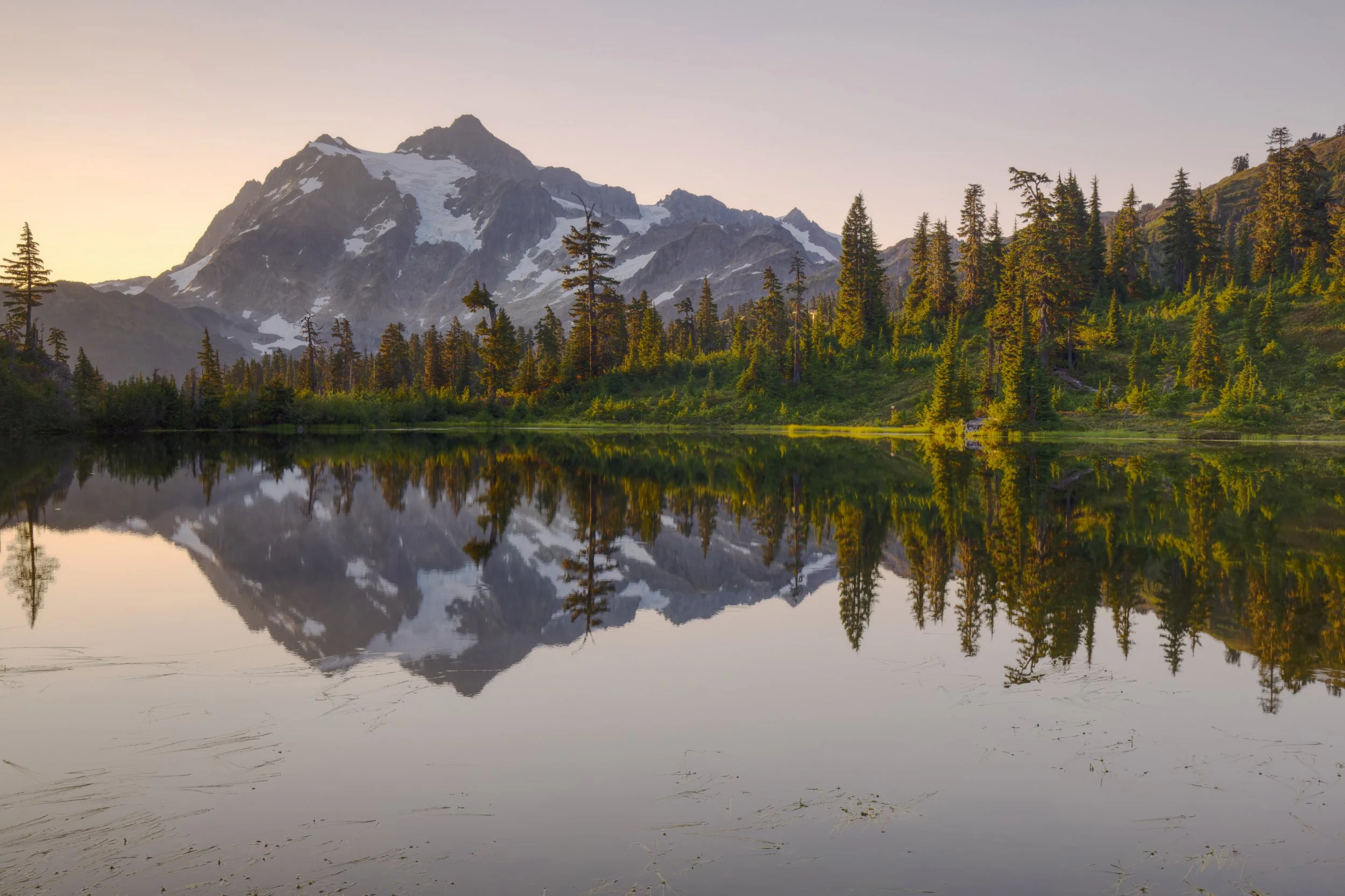
This has created a profound sense of cognitive dissonance. On my feed, I see "landscapes" that never existed: composites of mountain peaks from the Alps placed behind desert floors from the Mojave, illuminated by a sun that doesn't follow the laws of physics. They are breathtakingly "perfect," and yet, they are hollow. And perhaps even more shocking is the amount of big-name professional photographers that are using AI to manipulate versions of reality.
As a creative, this trend is jarring. When we use AI to create a version of nature that is "better" than reality, we aren't just making a picture; we are telling ourselves that the world as it is - in all its subtle, gritty, imperfect glory - is somehow insufficient. We are training our brains to crave a dopamine hit from a digital mirage while the actual, breathing world outside our window goes unnoticed. Photography, at its heart, is an art form of witnessing. True art should be a reflection of the reality you surround yourself with - a dialogue between the artist and the world as it actually exists. When we trade that reality for a generated prompt, we don’t just lose the truth of the landscape; we lose the integrity of the art.
The Labor Theory of Art: Why the Struggle Matters
I have been thinking back my undergraduate days, and a specific semester-long course: the class was Modern Political Thought. I was tasked with studying the Enlightenment philosophers, and while much of that era feels distant, I recently recalled John Locke’s Labor Theory of Property. Locke argued that the value of anything in the "commons" - the raw resources of the world - is derived from the labor we mix with it. He wrote:
“Whatsoever then he removes out of the state that nature hath provided, and left it in, he hath mixed his labour with, and joined to it something that is his own, and thereby makes it his property.” — Two Treatises of Government (1690)
I believe landscape photography operates on the exact same moral plane.
When an AI generates an image from a text prompt, there is no labor. There is no friction. There is no sweat, no cold fingers, and no risk of failure. The "value" of that image is essentially zero because the creator hasn't mixed their soul or their effort with the world.
In contrast, the "value" of a photograph from the high backcountry is born from the struggle. It is the 3:00 AM alarm that feels like a physical blow. It is the thirty-pound pack digging into your shoulders as you gain elevation in the dark. It is the uncertainty - the very real possibility that after five miles of hiking, the fog won’t lift, the light won’t break, and you’ll walk home with nothing but sore legs.
But it’s exactly that potential for failure that makes the "magical" moments mean something. When the light does break over a ridge, you haven’t just "captured" it; you’ve earned the right to witness it. You have mixed your labor with the landscape, and the resulting art is a testament to that physical journey. Without the struggle, the art is just a decoration.
The Trap of Convenience Culture
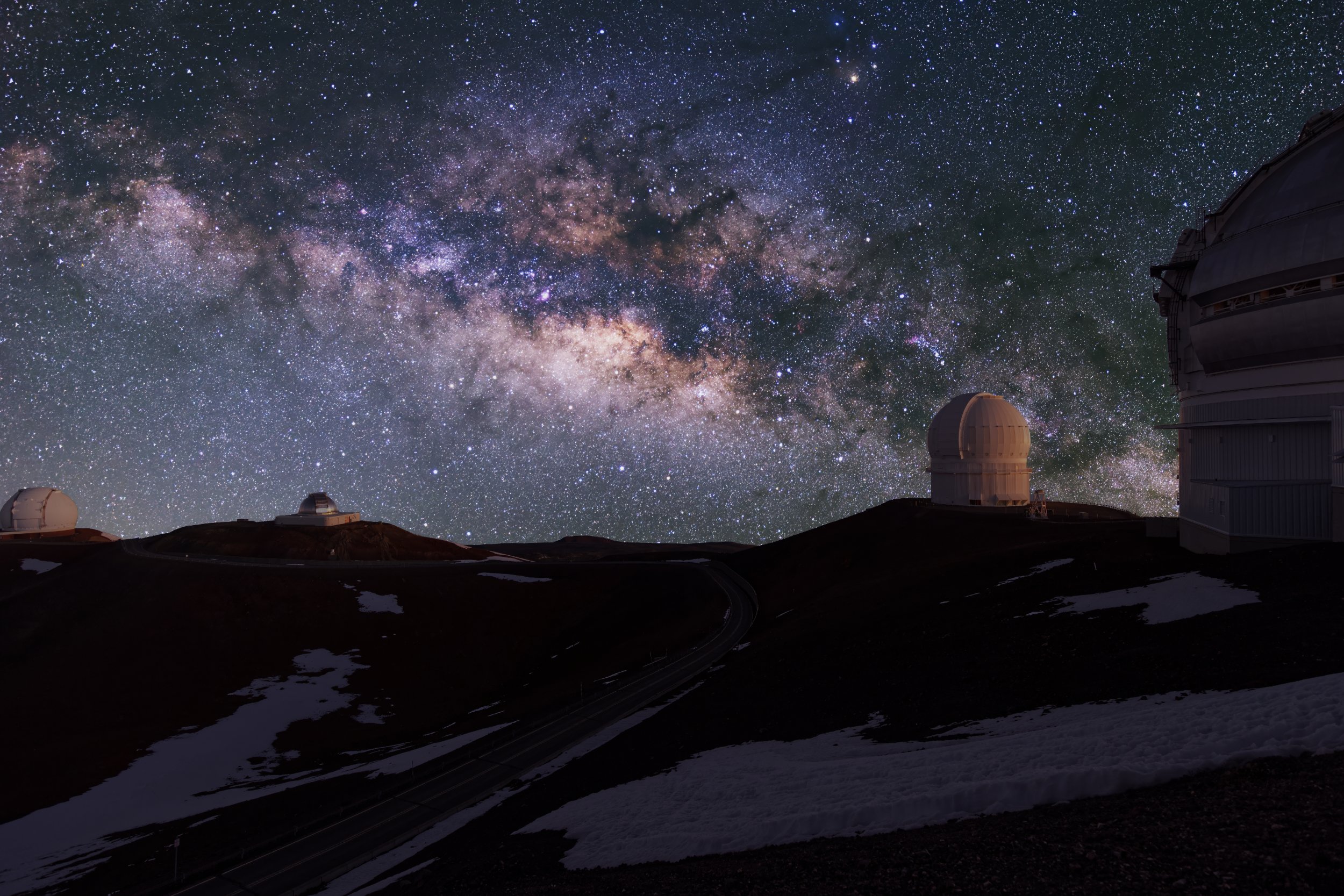
This shift toward AI is a natural extension of our growing "convenience culture." We’ve been conditioned to value quantity over quality and speed over depth. You see this most clearly on social media, where feeds are overwhelmed by an endless loop of the same dozen "famous" locations.
The digital algorithm rewards the familiar, so we see the same rock formation, the same lake, and the same composition, over and over. This "trophy hunting" for shots lacks any real creative thought. It’s photography as a transaction - you go to the spot, you get the "clout," and you leave. Nothing about AI generated images nor trophy hunting for shots significantly adds to the artistic discourse.
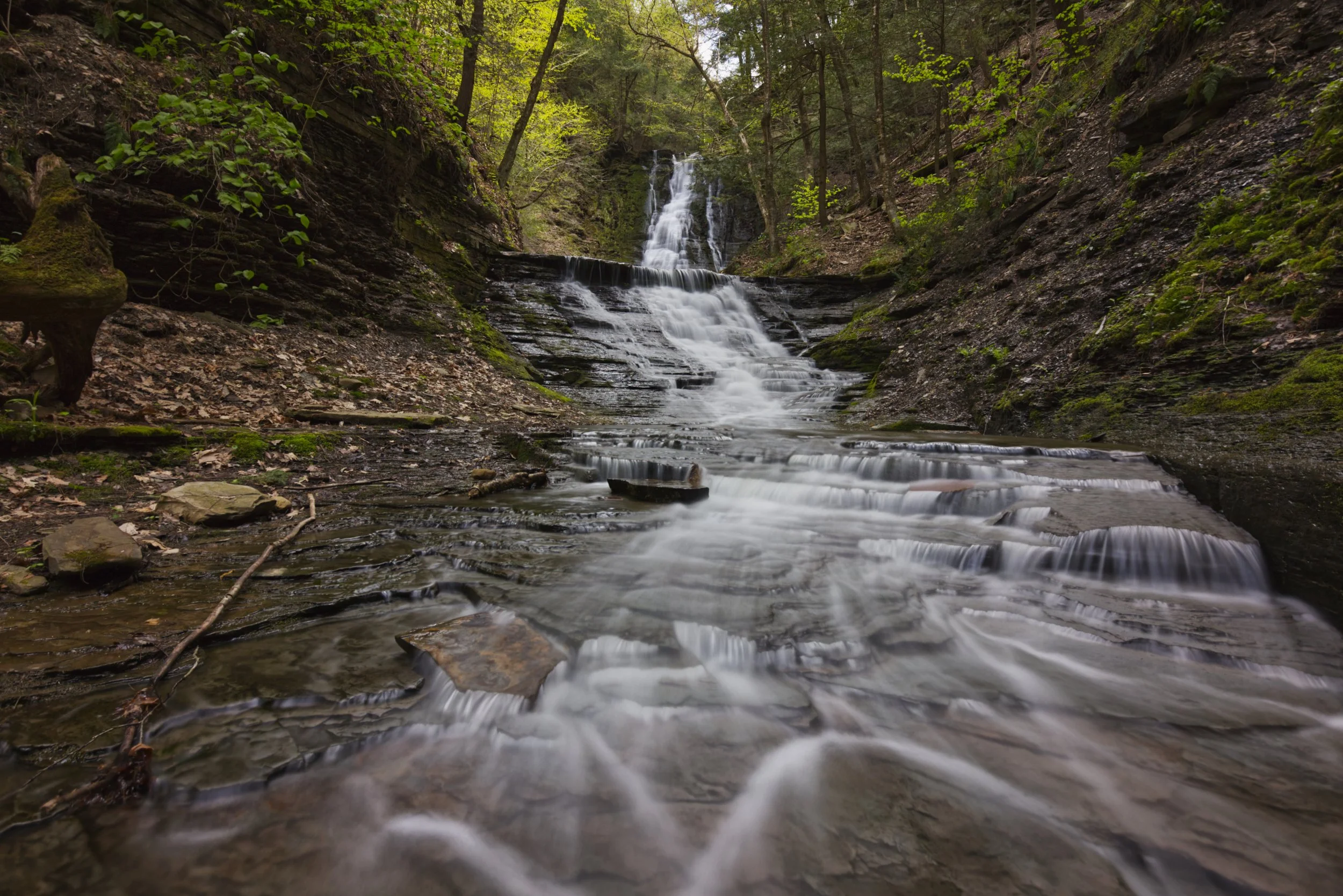
But breaking away from that cycle is incredibly freeing. When you stop chasing the shots everyone else has, you begin to truly understand what it means to be in the wild. It’s no longer about social clout; it’s about appreciating the powerful, delicate world we call home. It’s about realizing that a nameless creek in a quiet forest can be just as profound as a world-famous peak, provided you are present enough to see it.
Convenience is the enemy of observation. When we make things easy, we stop looking. We stop wondering. We just consume.
The Dulling of the Senses
To retreat entirely into the digital or the convenient is to accept a form of sensory deprivation. When we stop seeking the physical world, our senses begin to dull. We become accustomed to the flat, sterile glow of a screen and forget the nuances of a temperature drop as the sun dips below the horizon.
We lose the ability to appreciate the subtle, muted grays of a foggy morning because we’ve been conditioned to crave the oversaturated, impossible colors of a digital composite.
As a landscape photographer, it has never been more important to stay true to myself and the creation of my art. I don’t want to create a "perfect" scene; I want to capture the one that made me catch my breath, exactly as it was. I want to feel the grit of the world.

Protecting the Fragile Reality
But as we advocate for more people to find their way back to the wild, we have to talk about how we do it. The physical world is not a backdrop for our content; it is a fragile, living system.
We’ve all seen the stories: "superblooms" trampled for a selfie, or delicate cryptobiotic crust destroyed by someone wandering off-trail for a "unique" angle. Or perhaps most aggravating: individuals climbing over fences in dangerous locations to get the “perfect shot.” This is the irony of our time - as we crave the authentic beauty of the world, we risk loving it to death through sheer thoughtlessness.
To be a landscape photographer - or simply someone who enjoys the outdoors - is to be a steward. It means moving through these spaces with a sense of reverence. It means understanding that the alpine moss on a rock in the Northeast or the sandstone arches of the Southwest took millennia to form and can be undone in a single, thoughtless second.
We protect what we love, but we can only love what we truly know. By getting outside and experiencing the world respectfully, we develop the "skin in the game" required to fight for its preservation. You don't fight for a digital file. You fight for the forest where you smelled the pine and felt the earth.
The Solace of the "Backwards" Recluse
To some, this might appear like backwards thinking. In a world obsessed with "more, faster, easier," my desire to hike for hours just to wait for a single moment of light might seem inefficient. I might seem a bit reclusive for my constant desire to slip away into the backcountry, avoiding the growing frustrations and relentless pace of the digital world.
But I’ve found that there is a profound healing in that reclusiveness. Nature is a sanctuary of timelessness. While the digital world reshapes itself every hour, the mountains remain. There is a deep, quiet peace in knowing that no matter how chaotic the "real" world becomes, there is always solace to be found alone in the high country.
If being "stuck in the past" means I prefer the sting of a cold wind on my face over a VR headset, then I wear that label gladly. There is a specific kind of mental clarity that only comes when you are the only human for miles. It isn't loneliness; it is a homecoming.
Memories You Can Feel
Because at the end of the day, the best memories aren't the ones you view - they’re the ones you experience.
A digital file can be deleted, and a generated image can be replicated a thousand times, but nothing can replicate the visceral feeling of the crunch of packed snow beneath your boots in the dead of winter. No algorithm can simulate the damp, earthy smell of an autumn wood after a first frost, a scent that lingers in your memory and tethers you to a specific moment in time.
These experiences stick with you for a lifetime because they required your presence. They required you to be small in the face of something grand.
Whatever happens in our digital future, I’ll be out there. I’ll be chasing the light, respecting the fragility of the land, and documenting the truth - one real, imperfect, and beautiful mile at a time.
I’d love to hear from you...
I realize my stance on "convenience culture," AI, and the Lockean value of labor might be a bit traditional. But I believe there’s a line we shouldn't cross if we want to keep our connection to the earth intact.
I’m curious to hear your thoughts:
The Value of Struggle: Do you agree that the "labor" of getting to a location adds to the artistic value of a photo? Does the 3 AM hike change how you feel about the final image?
The "Smallness" Factor: When was the last time you stood in nature and felt truly small? Where were you, and what was that feeling like?
The Digital Divide: Have you ever felt that "cognitive dissonance" I mentioned - scrolling through endless "perfect" photos and feeling more disconnected rather than inspired?
Leave a comment below. I read and reply to every single one.
Finding Your Own Silence
If this resonates with you, I invite you to step away from the noise this week. You don’t need to trek into the deep backcountry to find peace; you just need to find a place where the digital world can’t reach you.
I’m committed to documenting the world as it is. Honestly, respectfully, and without shortcuts. If you’d like to follow along with these stories from the trail and see the world through a lens that values truth over "perfection," I’d love to have you join my newsletter. No algorithms, just stories and scenes from the wild delivered to your inbox.
