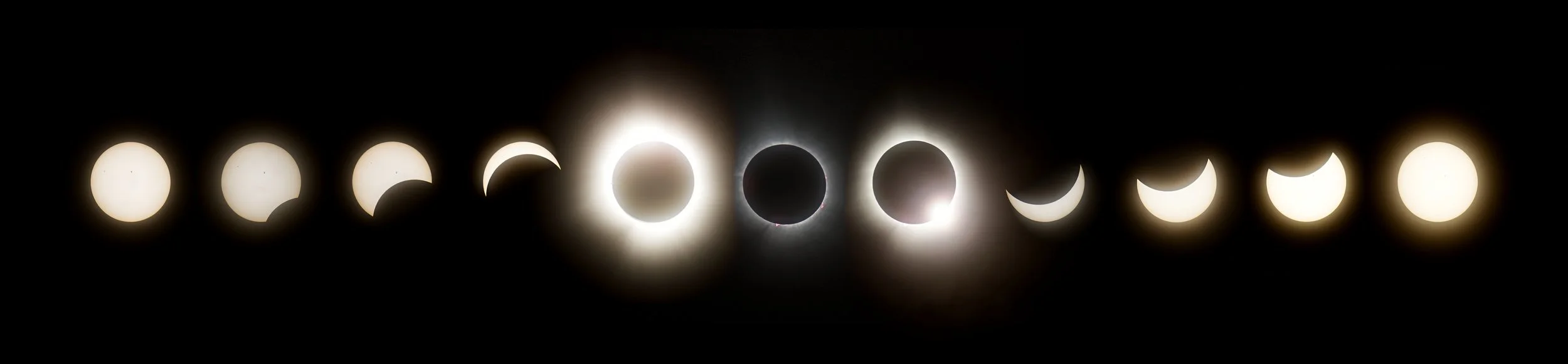
Transition to Totality

from $90.00

Capturing the 2024 total solar eclipse was easily the most difficult and stressful experience I have ever had with a camera. The journey started with an exhausting drive from South Dakota all the way to Upstate New York, fueled by nothing but caffeine and the hope for clear skies. By the time we arrived, we were completely worn out and sick of being in the car. But there was no time to rest. With only one day at home in Syracuse before the big event, I was frantically checking weather models every hour.

The forecast for New York was falling apart as clouds began to move in. I started looking at Vermont, where the skies looked clear, but the thought of adding more hours to an already brutal drive back to South Dakota felt impossible. We went back and forth, weighing the shot against our own sanity, until we decided to gamble and head back west. We settled on Catawba Island, Ohio. Forecasters were calling for some thin, high clouds, but they were fairly certain the sun would still be visible through them. We took the chance.

I set up my telephoto lens and solar filter in a small park along the water. As the moon began its transit, more people started trickling in, setting up chairs and telescopes. I had a rigid plan to capture the sun every six minutes so I could eventually merge the phases into one single, seamless panorama. Then, totality struck.

It is a feeling I will never forget. The world went dark in the middle of the day and the temperature dropped. In that park, a crowd of complete strangers began to cheer. For those few minutes, there were no politics, no arguments, and no greater problems in the world. It was just hundreds of people looking up together at a black ring in the sky.

This image is perfect for someone who wants more than just a landscape on their wall. It is for the collector who values a piece of history and a testament to the labor required to be in the right place at the right time. Because of its unique panoramic format and the technical precision of the eclipse phases, this photo is a centerpiece for a gallery focused on the celestial or the grand scale of the universe. It belongs in a space where it can spark a conversation about that rare moment when the world stood still and everyone, for once, was looking at the same thing in awe.

This print was chosen my MPix to hang in their photo lab. Each time you order something from MPix, the team is looking at this image while working on yours.

Capturing the 2024 total solar eclipse was easily the most difficult and stressful experience I have ever had with a camera. The journey started with an exhausting drive from South Dakota all the way to Upstate New York, fueled by nothing but caffeine and the hope for clear skies. By the time we arrived, we were completely worn out and sick of being in the car. But there was no time to rest. With only one day at home in Syracuse before the big event, I was frantically checking weather models every hour.

The forecast for New York was falling apart as clouds began to move in. I started looking at Vermont, where the skies looked clear, but the thought of adding more hours to an already brutal drive back to South Dakota felt impossible. We went back and forth, weighing the shot against our own sanity, until we decided to gamble and head back west. We settled on Catawba Island, Ohio. Forecasters were calling for some thin, high clouds, but they were fairly certain the sun would still be visible through them. We took the chance.

I set up my telephoto lens and solar filter in a small park along the water. As the moon began its transit, more people started trickling in, setting up chairs and telescopes. I had a rigid plan to capture the sun every six minutes so I could eventually merge the phases into one single, seamless panorama. Then, totality struck.

It is a feeling I will never forget. The world went dark in the middle of the day and the temperature dropped. In that park, a crowd of complete strangers began to cheer. For those few minutes, there were no politics, no arguments, and no greater problems in the world. It was just hundreds of people looking up together at a black ring in the sky.

This image is perfect for someone who wants more than just a landscape on their wall. It is for the collector who values a piece of history and a testament to the labor required to be in the right place at the right time. Because of its unique panoramic format and the technical precision of the eclipse phases, this photo is a centerpiece for a gallery focused on the celestial or the grand scale of the universe. It belongs in a space where it can spark a conversation about that rare moment when the world stood still and everyone, for once, was looking at the same thing in awe.

This print was chosen my MPix to hang in their photo lab. Each time you order something from MPix, the team is looking at this image while working on yours.

Material:
Size:

Metal Prints

Metal prints are celebrated for their unmatched durability and vibrant color presentation, delivering extraordinary sharpness and detail. The sleek, modern finish enhances the luminosity of each image, making colors pop with a radiant glow. With superior fade resistance, metal prints maintain their brilliance over time, embodying the pinnacle of photographic reproduction.

Each image is first printed to a transfer paper, then infused into Chromaluxe metal by heat and pressure. This process combined with our custom made color profiles give true to life colors and exceptional detail.

Fine Art Glicee Paper Prints

Fine art prints stand out with their exceptional quality, capturing the subtlety of shades and the intricacies of texture, ideal for reproducing artworks and photographs with artistic merit. Their archival inks and heavyweight papers promise longevity and aesthetic appeal, offering a sophisticated, gallery-worthy presentation that honors the creator's vision. All fine art prints require framing. I currently do not offer framing or mat boards for photo prints and fine art prints.

My fine art prints utilize the highest quality archival inks printed onto premium photo paper. This process ensures a sharp and true-to-life image, reflecting both the subtleties and vibrance of the original.

Canvas Prints

A museum-quality canvas ready for display. Using the giclee printing process, archival ink is sprayed onto these fine art canvases and gallery-wrapped. These prints feature subtle fine art texture with ultra-tight corners and sharp color accuracy.

All photos are printed on certified archival quality canvas that is hand-stretched in the USA around a 1.5” wood stretcher frame. Canvas includes a smooth matte finish that eliminates any unwanted glare or reflections. Canvas is a poly-cotton blend that is guaranteed to have a 100+ year display life. With no optical brighterners or synthetic fibers, this is considered the highest quality canvas available in the photo printing industry. Once wrapped, a durable display handware is attached directly to the back of the canvas. Depending on the size, this will either be a sawtooth or wire for hanging.

Recommend using a microfiber towel to remove dust or fingerprints.